Pavel Klinger / Benchmark / October 2026 · Part 2 of What gpt-image-2.5 draws when you describe everything, and which model can check it
Not just two models. The title is the newest pairing, but the measurement is wider. Every test here was first run on gpt-6.1-sol, the strongest judge from part 1, and on gpt-6-luna, its cheap sibling. Then Anthropic released Claude Haiku 5.5 (on OpenRouter since 2026-10-07) at exactly luna's price, $0.10 per million input tokens and $0.50 per million output tokens, and I ran it through the same images, four times. So each table has three API judges: sol as the bar, and two cheap models with the same price list. The same price list, not the same bill: on these tests Haiku cost about 28–44 % more than luna at low.
In part 1 a judge had to tick a checklist: is this thing in the picture or not? Two harder questions came out of it, both of which I need answered before I let a model check pictures for me:
- Counting. "Three flour sacks" was where the image model slipped most. Can a judge count?
- What does not belong. The image model fills gaps with its own assumptions. Given only the place and the date, can a judge spot an asphalt road in a medieval village, or a lateen sail in Bronze Age Egypt that the model added on its own?
In short
| gpt-6.1-sol | gpt-6-luna | Claude Haiku 5.5 | |
|---|---|---|---|
| Counting, part 1 images (434 questions) | 96.3 % | 91.5–92.6 % | 88.5–89.2 % |
| Counting, new set (144 images, 2–15 things) | 96.5 % | 89.6–90.3 % | 77.1–92.4 % |
| Planted out-of-place thing named | 48 of 48 | 47 of 48 | 44–48 of 48 |
| Out-of-place things the image model added itself, found | 5 of 8 | 0 of 8 | 1–3 of 8 |
| Clean images with a false alarm | 7 of 40 | 5 of 40 | 3–13 of 40 |
| Cost of the three tests above, per run | $1.88 | $0.09 | $0.12–0.14 |
sol and luna at reasoning effort "low". A range is the spread over runs: three repeats of luna at low on counting, and four Haiku configurations (no effort setting, then low, medium and high), which are different settings rather than repeats. More on effort below.
- sol counts almost perfectly and finds the most of what the image model added on its own.
- For counting, luna is my cheaper, repeatable choice in this test. On the part 1 images, luna beat every Haiku configuration I tested. On the new set, luna was repeatable at low (within a point over three runs), while Haiku's four effort configurations ranged from 77.1 % to 92.4 %. Haiku's misses lean one way: it mostly counts too many.
- For what does not belong, Haiku sees what luna misses. In every configuration it found at least one of the eight things the image model added on its own, one of which no other model named; luna found none. But it is noisy: its false alarms ran from 3 to 13 of 40 clean images depending on the configuration.
- luna at "medium" effort counts nearly as well as sol (94.4 %) for about a twentieth of the price. Effort did not help it see where one flour sack ends and the next begins.
- "Low effort" does not mean the same thing across vendors. luna takes an explicit low reasoning setting; Haiku thinks adaptively, and in a single-image test it reported no reasoning at all below "high".
The setup
The images. All drawn by gpt-image-2.5 (variants sunburst and flare), flat-colour storybook style, as in part 1.
- Counting, part 1 images. The 60 watermill-yard images from part 1. For 11 kinds of listed element (flour sacks, geese, a donkey, a heron…) the judge says how many it sees: 440 questions. Six are left out of the scores: four ladder questions whose wording named a place, and two sack counts I could not settle. 434 remain. Most of these questions concern single objects; the new set deliberately stresses larger counts.
- Counting, new set. Sheep, barrels, boats, birds on a wire, apples and people in a queue, each requested as 2, 3, 5, 7, 10 or 15, either clearly separate or partly overlapping: 144 images.
- What does not belong. Eight scenes, each drawn twice: once with a planted anachronism and once without it. An asphalt road in a Bohemian village in 1350, an electric street lamp in a 1st-century Roman street, glazed windows in a Viking longhouse in 900, a plastic bucket in an 1850 farmyard, an electric pendant lamp in a medieval scriptorium, a plastic bottle on a beech-forest floor, a high-voltage pylon on an alpine meadow, and corrugated iron on a quay in Egypt around 1400 BC. Six images of each: 96.
What the judge is told. For counting: only what to count and what it looks like ("small boats: small rowing boats with plain hulls"), never the number that was requested. For what does not belong: only the setting sentence ("A Bohemian village around the year 1350.") and the instruction to list anything that does not belong there. It never sees the prompt that drew the picture.
The truth. As in part 1: an independent reference reading by Claude, and wherever any judge disagreed with it, I settled the question myself in a small app that shows one large image and one question at a time, without anyone's answers. For the out-of-place test I settled whether each listed thing is really in the picture; Claude then judged from the descriptions whether it belongs in the period, and the cases neither of us could decide are left out. Later rounds re-checked both sides, not only the questions where I had disagreed with the reference.
Two kinds of reader. The three judges above are single API calls: one image, one prompt, one structured answer. I also had Claude models read the same images as agents with tools (they can zoom, crop and look again). That is a different kind of reader, so it gets its own section and is not mixed into the tables.
Counting
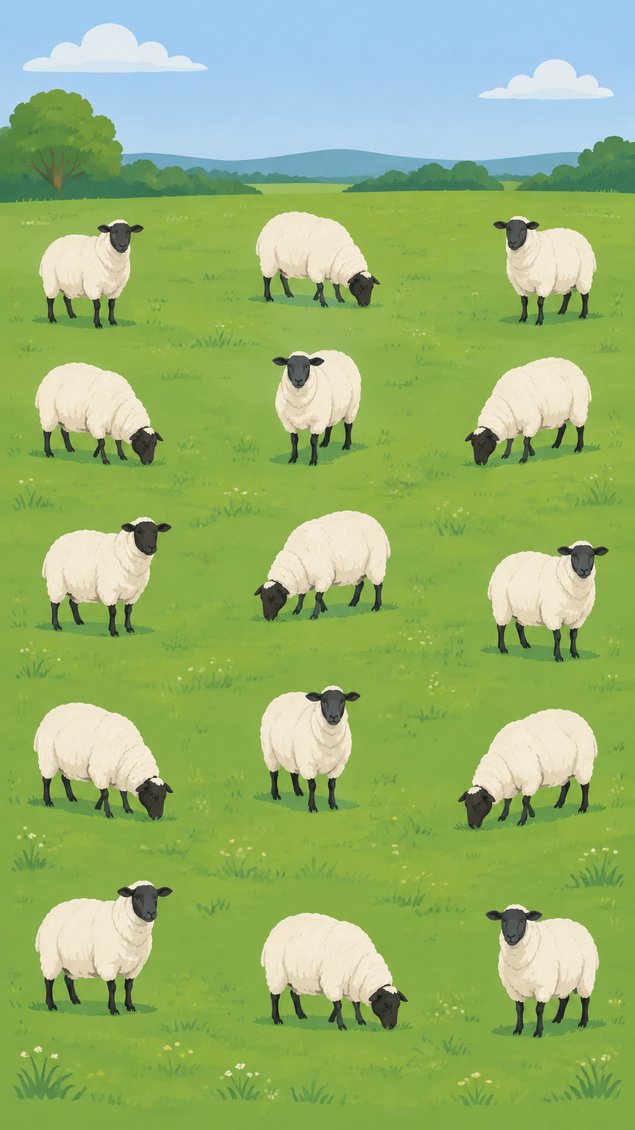
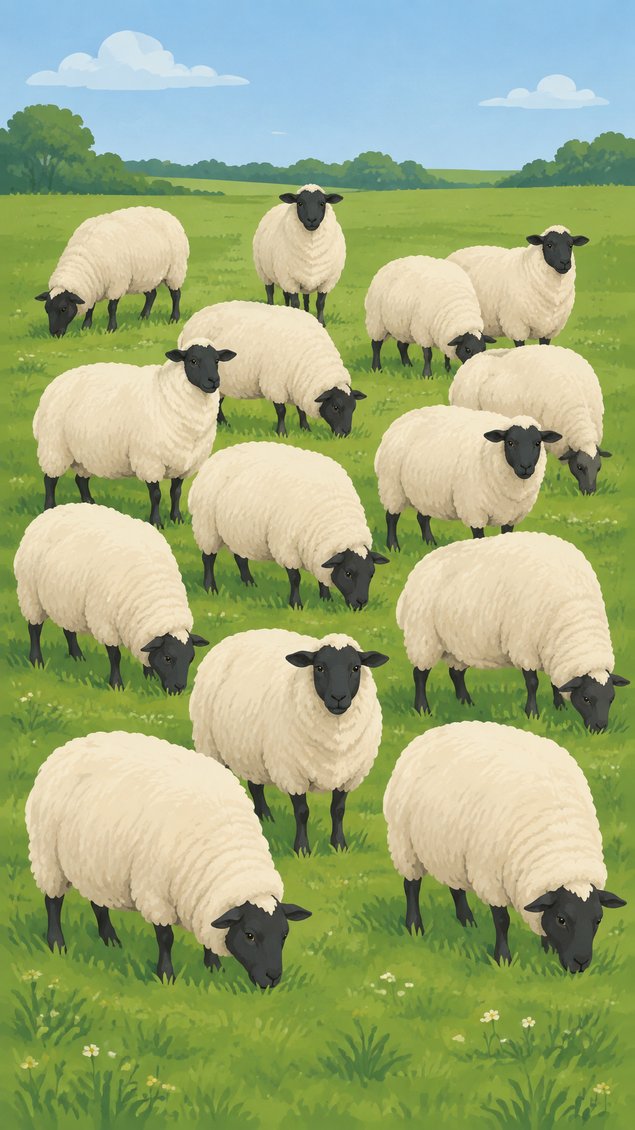
What the image model draws
| requested | drawn exactly |
|---|---|
| 2–3 | 100 % |
| 5 | 96 % |
| 7 | 92 % |
| 10 | 83 % |
| 15 | 46 % |
| separate / overlapping | 94 % / 78 % |
gpt-image-2.5 usually holds an exact count up to seven. At ten it misses one image in six, at fifteen more than half, and overlapping things are harder than separate ones. If a picture must show an exact number above seven, check it.
Who can count it
| gpt-6.1-sol | gpt-6-luna | Claude Haiku 5.5 (four configurations) | |
|---|---|---|---|
| all 144 images | 96.5 % | 89.6 % | 77–92 % |
| 2–3 things | 100 % | 100 % | 100 % |
| 5–7 | 96 % | 94 % | 79–88 % |
| 10 | 92 % | 79 % | 67–92 % |
| 15 | 96 % | 71 % | 38–92 % |
| separate / overlapping | 100 / 93 % | 94 / 85 % | 81–93 / 74–92 % |
| part 1 images, 434 questions | 96.3 % | 91.5 % | 88.5–89.2 % |
Bands are the number requested in the drawing prompt; every judge was scored against the number actually drawn. Percentages are exact counts against the settled truth; luna's column is its first run at low. Below five, everyone is right. From ten up the two cheap models fall behind sol, and differently: luna's errors go both ways and cancel out on average, while Haiku mostly adds (in its first run, on average +0.17 of a thing at ten and +0.33 at fifteen; three of its four configurations lean that way).
The flour sacks are a disputed case, not a clean score. In the part 1 images the sacks lie on top of each other, two to ten of them, and often you cannot see where one sack ends and the next begins. I could not always tell either: on two images I could not decide between three and four, and they are left out, but the rest are my best reading, not a certain count. So take these numbers as an indication only: sol matched my count on 78 % of the 58 sack questions, luna on 47 %, Haiku on 28 % in its first run. The gap says something about how carefully each model looks; it does not say any of them is wrong where a person could be sure.
One formatting slip. On 19 of the 24 queue images Haiku's first run answered with the label queue: people instead of the id queue it was asked to echo. I accepted the label and scored the counts normally; 15 of those 19 matched the settled truth. A strict pipeline would have discarded all 19.
Would more thinking help? For luna, yes, but only where there are many separable things:
| luna effort | new set | part 1 images |
|---|---|---|
| low (three runs) | 89.6 / 89.6 / 90.3 % | 91.5 / 92.6 / 92.4 % |
| medium | 94.4 % | 91.5 % |
| high | 95.1 % | 91.2 % |
At medium, luna's fifteen-item counts went from about 70 % to 88 %, and it got within about two points of sol for about a twentieth of sol's price. On the stacked sacks nothing moved. Effort buys care, not seeing. The three runs at low are the same model on the same images: that spread is the noise.
Does effort help Haiku?
To compare like with like, I ran Haiku again at reasoning effort low, medium and high (sent through OpenRouter's reasoning setting), next to its first run with no setting at all:
| Claude Haiku 5.5 | new set | part 1 images | model-added misfits | false alarms | cost, three tests |
|---|---|---|---|---|---|
| no effort setting | 86.8 % | 88.9 % | 3 of 8 | 7 of 40 | $0.13 |
| low | 77.1 % | 88.9 % | 1 of 8 | 13 of 40 | $0.12 |
| medium | 84.7 % | 89.2 % | 3 of 8 | 3 of 40 | $0.13 |
| high | 92.4 % | 88.5 % | 2 of 8 | 7 of 40 | $0.14 |
Two things stand out. First, Haiku 5.5 thinks adaptively, deciding for itself whether to reason. On a separate single-image probe, the API reported zero reasoning tokens at default, low and medium, and 399 at high. From call costs I estimate that roughly one fifth of the high calls used extra reasoning; that is a cost-based estimate, not a direct count, because I did not record reasoning-token usage for every benchmark call. So "low" for Haiku is not the same setting as "low" for luna. Second, these are four different configurations, not four repeats at the same setting. Their counting scores differ by fifteen points and their false alarms by a factor of four. I cannot separate the effect of effort from run-to-run variation here. At high, Haiku beat luna at low on the new set, but not luna at medium, which costs less; on the part 1 images it stayed behind luna in every configuration.
What does not belong
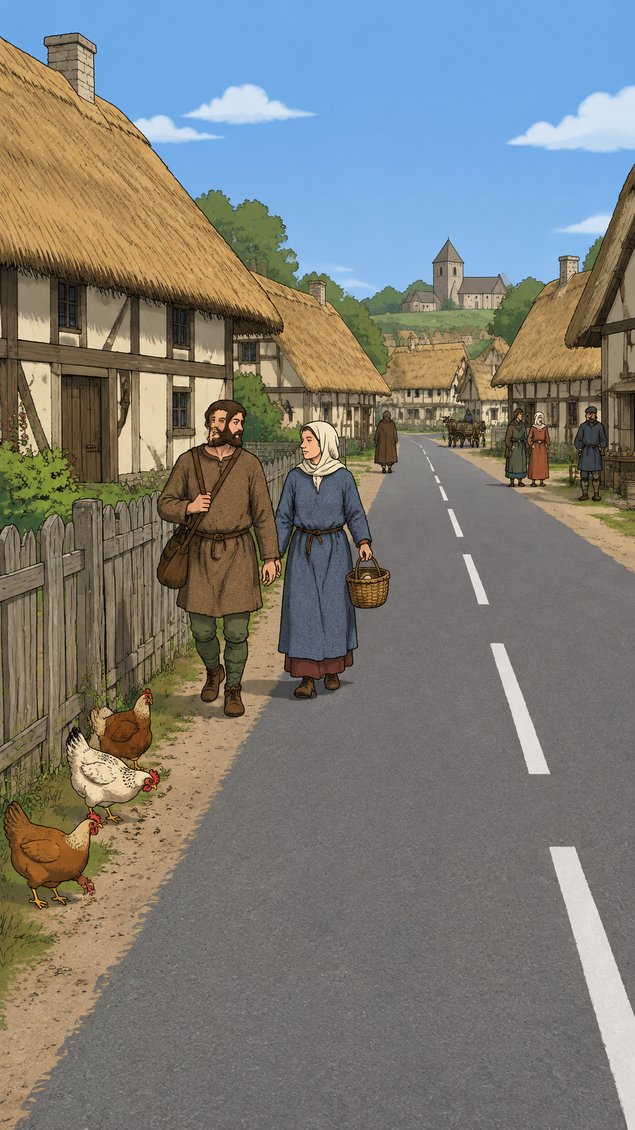
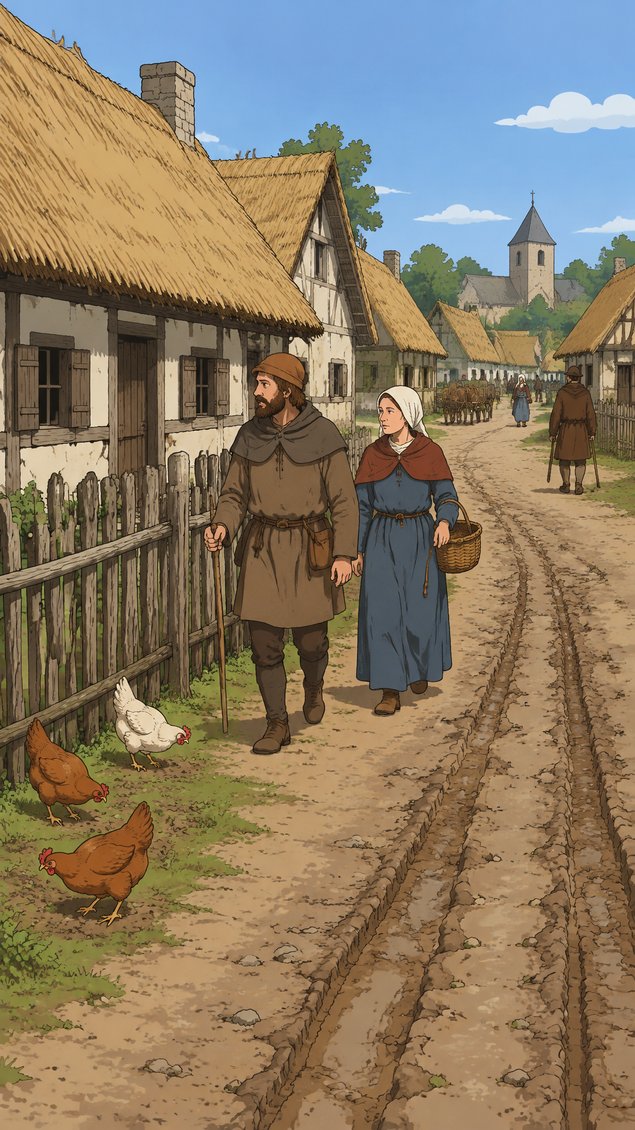
The planted anachronisms are easy. All three judges named them almost every time; Haiku's first run missed the alpine pylon on four of six images, its configuration at low named every planted thing.
The interesting part is the clean twins. The prompt for those asked for nothing out of place, and yet the image model added things on its own. On eight of the 48 clean images I confirmed a real one:
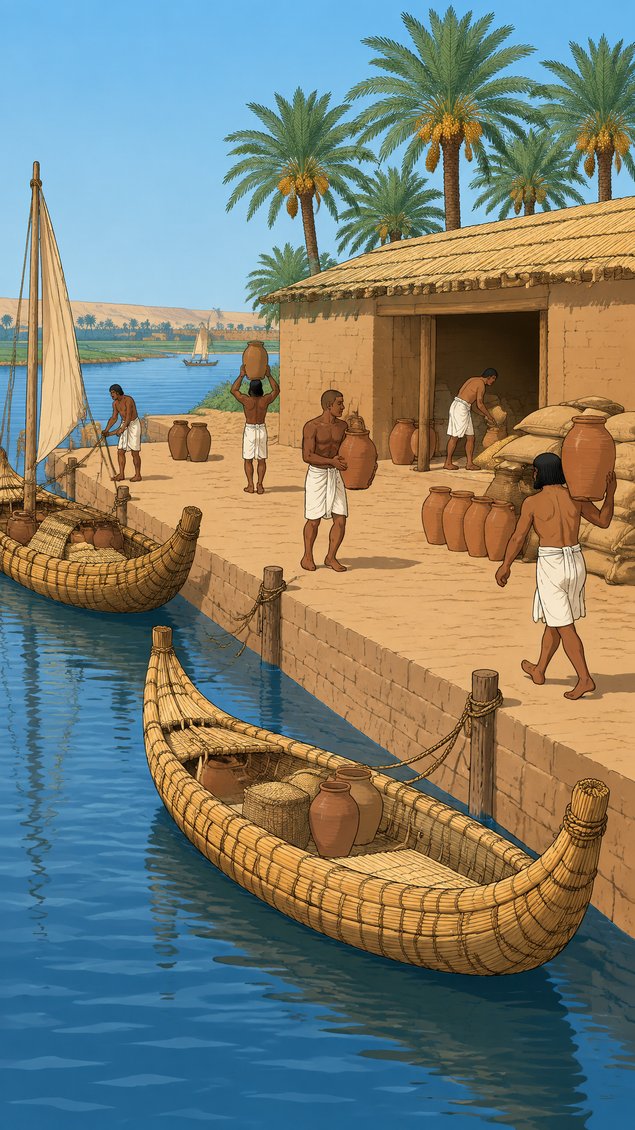
- triangular lateen sails on boats in Egypt around 1400 BC (four images),
- a glass-chimney oil lamp in a 1st-century Roman street,
- a two-headed cow on an alpine meadow,
- a woman with a third foot in the Roman street,
- a yellow plastic ear tag on a cow in an 1850s farmyard.
| gpt-6.1-sol | gpt-6-luna | Claude Haiku 5.5 (four configurations) | |
|---|---|---|---|
| planted thing named (48 images) | 48 | 47 | 44–48 |
| model-added misfits found (8) | 5 | 0 | 1–3 |
| clean images with a false alarm (40) | 7 | 5 | 3–13 |
| listed things rejected, of those settled | 8 of 69 | 15 of 61 | 7 of 60 to 23 of 75 |
sol finds the most of what the image model added. Its false alarms are arguable rather than silly: a hay-drying rack, a pine cone. luna finds none of the eight. Haiku finds one to three, depending on the configuration: the glass lamp in all four, the plastic ear tag in three (no other model ever named it), a lateen sail in two. Its false alarms are of a different kind: a Bernese-like farm dog and a barred hen in 1850, a husky-like dog and a striped rug in a Viking house, canvas awnings in Rome, and at low, a pine cone on the beech-forest floor five times. Most are period-sensitive guesses about breeds and styles that a picture cannot settle. No single judge found all eight. sol at low and at medium effort plus Haiku did, together.
A smoke hole is not a skylight. In the Viking longhouse the prompt itself asked for "a long central hearth under a smoke hole in the plank roof". Haiku read that opening as a glazed skylight again and again, in every configuration. I answered no, and not because I am a historian: smoke rises through it in every picture, so it cannot be glazed.
A blind spot that matters: I could only settle what at least one judge named. A misfit nobody listed stays unseen. A two-headed man by the asphalt road, which I noticed myself, was never asked about. And the image model puts a brick chimney on nearly every thatched cottage in the 1350 village; only Haiku mentioned it. Chimneyless smoke rooms were common in medieval Bohemian peasant houses, but I cannot call every pictured chimney impossible, so I left chimneys out of the scores, as I did with knitting and with a few listed things that are visible but that I could not call impossible for the period (a hollyhock, metal mooring chains, books shelved spine-out).
More effort for sol? At medium it again named every planted thing and found five of the eight model-added misfits, two of them different ones. Same quality, roughly the same price again.
Claude as an agent
Separately, I had Claude models read the new counting set as agents with tools, which is how I use them day to day. Not comparable with the single API calls above, so only for orientation:
| agent (effort) | new set, exact |
|---|---|
| Claude Opus 5.5 (medium) | 97.2 % |
| Claude Sonnet 5.5 (low) | 96.5 % |
| Claude Haiku 4.5 (low) | 79.9 % |
Opus has an unfair advantage: its reading was the starting reference that I then corrected.
The human is not a gold standard either
Again, I was wrong too. In overlapping groups I counted a gap with something showing through as one more. I counted sacks and forgot that the question also said "stacked". A "two-headed sheep" one reader reported turned out to be one sheep standing behind another. A two-headed cow and a two-headed man, on the other hand, were obvious once I saw them. I dropped one question entirely: knitting in the Viking longhouse. The needles are not visible, and needle knitting cannot be told from nålbinding in a picture.
And once it went the other way. In one image of seven requested sheep, partly overlapping, every model counted seven or six, and so did the reference. I settled that image as eight: I read the extra woolly back behind the front sheep as another animal. Otherwise the front sheep would have two rumps.
How this relates to public benchmarks
Counting is well covered by public benchmarks, and so, more thinly, is spotting things that do not belong. What they lack so far is results for the models I use.
- CountQA (2025): over 1,500 questions on real photos with dense, cluttered and overlapping objects. In the paper the best model reached 42.9 %. Later scores for newer models (Qwen3.7 Plus 77 %, Gemini 3.1 Pro 72.8 %, GPT-5.4 58.4 %, Claude Opus 4.6 32.5 %) are reported by a model vendor, not by the benchmark's authors.
- HoloCount (2026): 2,480 questions in 20 subsets, from simple counting to dense scenes and misleading prompts. Best macro average 76.9 % (Qwen3.5-397B-A17B), Gemini 3.1 Pro 74.7 %, GPT-5.5 67.6 %, Claude Opus 4.8 62.6 %. The authors' key finding matches mine: dense scenes are a weakness for every model.
- WHOOPS! (ICCV 2023): 500 generated images that break common sense, with the task of explaining what is wrong. TAB-VLM (2026) tests anachronisms directly, on 1,600 Indian cultural artifacts; the best of ten models, GPT-5.2, reached 58.7 %.
When I checked these papers and their project pages on 8 October 2026, none listed GPT-6.x or Claude 5.x results. Their numbers are also not directly comparable with mine: the datasets and tasks differ, from real-world counting to deliberately unusual generated scenes and reasoning about historical artifacts, while I count separable things in storybook illustrations and look for misfits in pictures an image model drew from a prompt I wrote. That is the narrower question I need answered: can a judge check this generator's output?
What I take from it
- Check counts above seven. The image model holds small numbers and loses large ones.
- For counting, a cheap judge at medium effort is enough: luna at medium, 94 %, for cents.
- For "what does not belong", use more than one judge. sol finds the most; Haiku sees things luna never does and costs a fraction of sol. sol and Haiku's first run together found seven of the eight model-added misfits here; the eighth, the woman's third foot, only sol at medium effort named. Expect to throw away a share of what either one names: about one item in eight for sol, between one in eight and one in three for Haiku, depending on the configuration.
- Test the configuration you will actually deploy. Haiku's four configurations told different stories: fifteen points apart on counting, a factor of four apart in false alarms. Repeating the same configuration is the next step if I want to measure its stability.
- Effort settings do not transfer between vendors. Check what a setting actually does (here: whether the model reasons at all) before comparing "low" with "low".
- Describe everything you draw, background included, and say what form it takes. The model's own misfits sat in what the prompt left open: it asked for "reed boats" and said nothing about sails, and for "an oil lamp" and said nothing about what kind.
- Put the price beside the score. sol cost about twenty times what luna did here, and about fifteen times what Haiku did.
Limits: one illustration style, six or so images per cell, one person settling, and a model reference behind every score. These numbers describe this sample.
Part 3: Counting beyond storybook pictures: the same three judges on CountQA and HoloCount.
Method notes
- Images: gpt-image-2.5 sunburst and flare, quality "low", portrait 1088×1936 px.
- Judges: gpt-6.1-sol and gpt-6-luna over the OpenAI Responses API at reasoning effort "low" (luna also at medium and high, and twice more at low on counting); Claude Haiku 5.5 over OpenRouter with structured JSON output, four configurations: no reasoning setting, then OpenRouter's reasoning effort low, medium and high. Haiku 5.5 thinks adaptively: in a single-image probe the API reported zero reasoning tokens at the default, at low and at medium, and 399 at high; reasoning-token usage was not recorded for the benchmark calls themselves. "Same price" means the same published token rates, not the same bill.
- Counting instruction: "You count things in ONE generated image. Count what is visible in the pixels. … If none is visible the count is 0. Return one entry per id with an integer count and a short note." The prompt names the thing and its look, never the number.
- Out-of-place instruction: "You examine ONE generated image for things that do not belong in the stated setting. List everything visible that does not belong there (an object or feature from the wrong period, man-made litter in a nature scene, and the like); for each give the thing, where it is, and why it does not belong. Answer only from the pixels." The prompt is only the setting sentence.
- Cost: $4.64 of API calls: images $1.27 (misfit set $0.51, counting set $0.76), judges $3.37 (sol $1.88 at low and $0.60 at medium, luna $0.37 across all efforts and repeats, Haiku $0.52 across four configurations, 19 calls repeated after a format slip, and the reasoning probes). Reference readings and my time are not included.
- Data and code: Data and offline scoring · Full-resolution images.
Pavel Klinger · bigr.cz